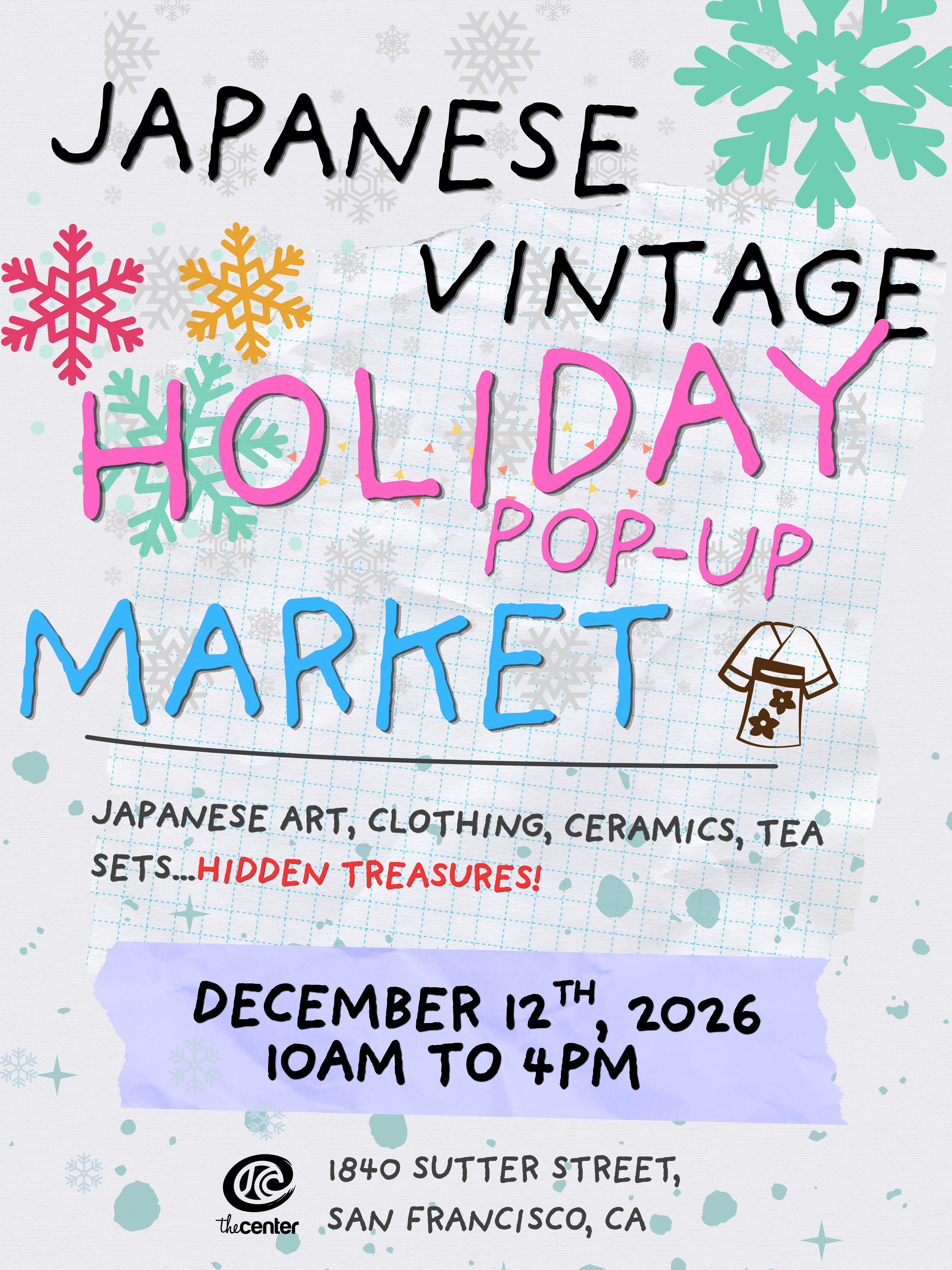
Please join us for this special sale.
Every featured item was donated to us by our community: vintage and antique Japanese ceramics, tea sets, lacquerware, kitchenware, books, clothing, vases, and locally made products.
When it's gone, it's gone. Many things will never be able to be found or purchased again.
We want to give each item a new home where it is appreciated and enjoyed for many new generations.
Keep scrolling to find out what we have, where your sales will benefit, and enter a quick visitor survey ↓
All proceeds support the programs of the Japanese Cultural and Community Center of Northern California (JCCCNC): cultural classes and workshops, community services, youth and senior programs, and the preservation of Japantown's history through the Takahashi Issei Heritage Center.
When you take home a treasure, you're helping this community center continue the work it has done in San Francisco's Japantown for decades.
Renowned as the most expensive porcelain in Japan, Kutani ("Nine Valleys") is famous for bold designs in five vivid colors: green, blue, yellow, purple, and red. First fired in 1655, revived in the 1800s with a dazzling red-and-gold style, and designated a traditional craft of Japan in 1975.
Urushi lacquer pieces take weeks of layering and polishing by hand. Vintage bowls, trays, and boxes like these are increasingly hard to find outside Japan.
From everyday Showa-era tableware to formal tea ceremony pieces. Functional art that carries the history of the households that used it.
In 1968, Hisashi and Akiko Kagami started Kotobuki Trading (usually translated as "long life" or "celebration") in the garage of their Richmond District home in San Francisco. The name "Kotobuki" was selected as it shares the same kanji character (寿) as Hisashi's father Masaru.
Initially, Kotobuki sold origami and small gift items but eventually grew into one of the largest companies importing items from Japan: ceramic ware, kitchen tools, and beautiful cast iron products. Kotobuki has been a strong supporter of the Center for many years, donating annually to our auction and other events. In 2021, Kotobuki closed its company and generously donated many of the items featured today.
Kokeshi dolls originated in the Tohoku Region of Japan, symbolizing good luck, protection against evil spirits, and a wish for children's healthy growth. Each doll is hand-painted, uniquely expressing the artist's style. Today, there are both the traditional (dento) and the creative (sosaku) styles of kokeshi, catering to the taste of many buyers. Our collection of kokeshi dolls comes from the Kagami Family and Kotobuki Trading, featuring both styles of dolls.
Handcrafted right here in the Bay Area using Yamato Indigo, a natural-blend Japanese indigo dye with roots going back to 1818. Each piece is hand-dyed using traditional techniques like shibori (tie-dye resist), producing rich, deep blues that are unique to every item. Indigo, or ai, has been called "Japan blue" for centuries. No two pieces come out the same, making each one a one-of-a-kind find.
And these are only a few highlights. Come explore.
This sale exists because of generous donations from our community. If you have vintage or antique Japanese items you'd like to donate for a future sale, we would love to hear from you.
This includes families clearing out a relative's home. If you're sorting through a loved one's ceramics, kimono, dishware, books, or keepsakes and aren't sure what to do with them, please reach out before anything is thrown away. Items that may not seem valuable can carry deep cultural and historical significance, and we can help give them a second life in the community.
Free pick-up: if you live in the Bay Area, we'll pick up your donated items at no charge.
Please call us at (415) 567-5505 ext. 231. We're happy to talk it through with you.
Four quick questions, about 30 seconds. It helps us make the next sale even better.